
K-Beauty and luxury skincare are often presented as two very different worlds. One is associated with multi-step routines, ingredient-focused formulas and innovative Korean beauty trends. The other is associated with premium packaging, established luxury houses and significantly higher price points.
In reality, the comparison is more complicated.
A lower-priced skincare product can have an ingredient list that looks very different from a luxury product, while two products at completely different prices can belong to the same general product category. The most useful comparison therefore isn't simply cheap versus expensive.
Instead, it is worth looking at product type, formulation, ingredients, quantity, positioning, packaging, brand strategy and price per amount.
This guide explains how to do exactly that without assuming that a higher price automatically means better performance.
K-Beauty vs. Luxury Skincare at a Glance
| Factor | K-Beauty | Luxury Skincare |
|---|---|---|
| Typical positioning | Ingredient-focused, trend-driven and routine-oriented | Premium, heritage, exclusivity and brand experience |
| Product range | Often includes essences, ampoules, toners, masks and serums | Often includes creams, serums, eye products and treatment-style skincare |
| Packaging | Ranges from minimalist to highly decorative | Often designed around premium presentation and brand identity |
| Price range | Very broad, from budget products to premium Korean brands | Generally positioned at the premium or luxury end |
| Ingredient communication | Often prominently features selected ingredients | May emphasize proprietary complexes, formulation concepts or brand heritage |
| Best comparison method | Compare products within the same category and consider quantity, formulation and current price. | |
What Does K-Beauty Actually Mean?
K-Beauty is commonly used as a broad term for Korean beauty products, brands and skincare trends. It is not one specific formulation standard.
The category includes inexpensive everyday skincare, specialist products, premium brands, makeup and a wide variety of product formats.
Popular K-Beauty categories include:
- cleansers
- toners and essences
- serums and ampoules
- moisturizers
- sunscreen
- sheet masks
- eye products
- lip care
-
haircare
One reason K-Beauty can appear particularly ingredient-focused is that many products prominently communicate selected ingredients on their packaging and marketing materials. This can make it easier for consumers to search for products associated with ingredients they are interested in.
However, the presence of an ingredient alone does not tell you everything about a finished cosmetic product. The overall formulation, concentration, combination of ingredients, product format and intended use also matter.
What Makes Luxury Skincare Different?
Luxury skincare is primarily a market positioning rather than a scientific category.
Luxury products may combine skincare formulations with premium packaging, brand heritage, sensory characteristics, distinctive fragrances, exclusive retail environments or extensive brand marketing.
A luxury price therefore does not automatically indicate that a product will be more suitable for your skin than a less expensive alternative.
Equally, a higher price does not automatically mean that a product is ineffective or that consumers are paying only for packaging.
The sensible approach is to separate product characteristics from brand positioning.
Compare Products Within the Same Category
One of the easiest mistakes when comparing skincare is comparing products that perform different roles in a routine.
For example, a cleanser should not be compared directly with a face cream simply because both contain interesting ingredients.
A more useful comparison looks like this:
| Product category | What to compare |
|---|---|
| Cleanser | Format, cleansing system, skin feel, size and price |
| Serum | Ingredient list, texture, intended use, size and price |
| Moisturizer | Texture, formulation, intended skin feel, size and price |
| Eye product | Format, ingredients, intended use, quantity and price |
| Mask | Mask type, ingredients, frequency of use, quantity and price |
| Sunscreen | SPF, UV protection information, formulation, size and current price |
This approach makes the comparison more meaningful and reduces the temptation to judge a product simply by its brand name or price.
How to Compare Skincare Ingredients
Ingredient lists can be useful when researching cosmetics, but they should be interpreted carefully.
An ingredient appearing on a label does not automatically tell you how much of it is present or what effect the complete formulation will have.
For that reason, avoid conclusions such as:
- “This ingredient guarantees better results.”
- “This serum repairs damaged skin.”
- “This product increases collagen.”
- “This cream reverses skin aging.”
- “This peptide product works better than a luxury cream.”
Such statements can go considerably further than what can safely be concluded from an ingredient list alone.
A more useful editorial approach is to describe what the product contains, what category it belongs to and how the manufacturer positions it.
Niacinamide: A Common Comparison Ingredient
Niacinamide, also known as vitamin B3, is widely used in cosmetic formulations.
It appears in many different product categories and price segments, including affordable drugstore products, specialist skincare and premium cosmetics.
When comparing niacinamide products, consider:
- the complete ingredient list
- the stated concentration when the manufacturer provides one
- the product format
- the amount of product
- additional ingredients
- the intended use
- the current retail price
It is not necessary to assume that the most expensive niacinamide product is the best choice.
Likewise, a low-priced niacinamide product should not automatically be considered inferior.
The more useful question is whether the particular formulation matches what you are looking for.
Peptides and “Biotech Beauty”
Peptides are another ingredient category frequently discussed in modern skincare.
The term biotech beauty is broader and can refer to cosmetic concepts involving biotechnology, fermentation, biotechnology-derived ingredients or other technology-oriented approaches to formulation.
These terms should not be treated as proof of superior cosmetic performance.
When a product description mentions peptides or biotechnology, check what the manufacturer actually says about the product and avoid assuming that the presence of a particular ingredient produces a specific result.
For consumers, the practical comparison can remain simple:
- What type of product is it?
- What ingredients are listed?
- What does the manufacturer say the product is intended for?
- How much product do you receive?
- How does the current price compare with similar products?
Hyaluronic Acid and Hydration-Focused Skincare
Hyaluronic acid is another familiar ingredient in skincare.
Products containing hyaluronic acid can be found across almost every price category, from inexpensive drugstore products to premium and luxury skincare.
Instead of treating “hyaluronic acid” as a guarantee of a particular outcome, compare the actual product.
Look at the formulation, texture, product size, other ingredients and intended use.
Two products can both mention hyaluronic acid while being very different products.
Why Luxury Skincare Can Cost Much More
Luxury skincare can be substantially more expensive than everyday skincare. That difference can reflect many factors, including:
- brand positioning
- packaging
- distribution
- retail environment
- marketing
- product development
- sensory characteristics
- brand heritage
- formulation and ingredient choices
It is therefore difficult to reduce the price of a cosmetic product to its ingredient list alone.
At the same time, consumers should not assume that a high price automatically guarantees a better choice for their individual needs.
How to Compare Prices Fairly
The simplest method is to compare products from the same category and look at both the total price and the quantity.
A basic calculation is:
Price per 10 ml = product price ÷ product quantity in ml × 10
For example, if a 30 ml product costs €15:
€15 ÷ 30 × 10 = €5 per 10 ml
This calculation does not tell you whether the product is “better”. It simply provides another way to understand the price difference.
For products measured in grams, use the same principle:
Price per 10 g = product price ÷ product quantity in g × 10
Always use the current displayed price when making a purchasing decision because promotions and retailer prices can change.
Budget, Mid-Range or Luxury?
| Price segment | What consumers may find |
|---|---|
| Budget | Basic skincare formats, widely available brands and simple formulations |
| Mid-range | Ingredient-focused products, specialist brands and broader formulation choices |
| Premium | Higher-priced specialist or prestige skincare and more elaborate product positioning |
| Luxury | High-end branding, premium presentation and products positioned around exclusivity or heritage |
These categories are descriptive rather than official industry classifications. Prices vary substantially by country, retailer, size and promotion.
K-Beauty vs. Luxury: Which Is Better?
There is no universal answer.
If you enjoy exploring ingredients, product formats and Korean beauty trends, K-Beauty may offer a particularly broad selection.
If you value luxury presentation, brand heritage, sensory experience or premium retail positioning, luxury skincare may be more appealing.
Neither preference automatically makes one category objectively superior.
A sensible buying decision starts with your own priorities and the particular product rather than the category label.
What About “Anti-Aging” Skincare?
“Anti-aging” is commonly used as a cosmetic marketing term, but it can easily become misleading if it is used to suggest medical effects or guaranteed biological changes.
For consumer-oriented comparisons, it is generally clearer to discuss concepts such as:
- skin appearance
- visible signs of aging
- smooth-looking skin
- hydrated-looking skin
- skin feel
- appearance of fine lines
- overall cosmetic appearance
These descriptions are more precise than suggesting that a cosmetic product can reverse biological aging.
How to Choose Between a K-Beauty and Luxury Product
| Question | Why it matters |
|---|---|
| What product category is it? | Different product types serve different roles. |
| What ingredients are listed? | Helps you understand the formulation at a basic level. |
| What does the manufacturer say? | Provides the official product positioning and intended use. |
| How much product is included? | Makes price comparisons more meaningful. |
| What is the current price? | Retail prices and promotions change. |
| Do you like the texture and format? | Personal preference can strongly influence whether you enjoy using a product. |
| Is the product suitable for your personal circumstances? | Individual skin needs and sensitivities differ. |
Selected Products on Ploution
Ploution covers a broad range of beauty, skincare, cosmetics and related products. The catalogue can be used to browse current products and compare options across different brands and categories.
Browse the Ploution beauty and skincare catalogue
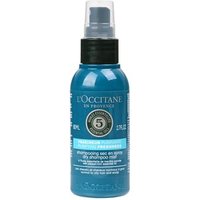
Examples of products currently featured in the Ploution catalogue include:

|
|
Important: Product availability, prices, formulations and retailer conditions can change. Check the current product page before purchasing.
A Simple Skincare Comparison Checklist
Before buying a product, ask:
- Is this the product category I actually need?
- What is the complete current ingredient list?
- What does the manufacturer say the product is intended for?
- How much product do I receive?
- What is the current price?
- How does the price compare with similar products?
- Do I have known sensitivities or ingredients I prefer to avoid?
- Am I choosing it because of the product itself or simply because of the brand name?
Frequently Asked Questions
Is K-Beauty better than luxury skincare?
Not automatically. K-Beauty and luxury skincare represent broad categories containing many different products. The better comparison is between individual products with similar purposes.
Are expensive skincare products better?
Price alone does not establish that a cosmetic product is better suited to a particular consumer. Compare the formulation, product type, quantity, current price and your own preferences.
Are K-Beauty products cheaper?
Some are, but K-Beauty covers a very wide price range. Korean beauty includes both accessible products and premium brands.
Should I compare ingredients?
Yes, ingredient lists can be useful, but they should not be used as the only measure of product performance. The finished formulation and intended use also matter.
Does a peptide automatically make a product better?
No. The presence of a particular ingredient does not by itself establish that one finished cosmetic product will be better than another.
Should I buy skincare based on the ingredient percentage?
Not necessarily. A percentage can be useful information when it is reliably provided, but the overall formulation and intended use remain important.
Is luxury skincare worth the price?
That depends on what you value. Some consumers may value the formulation, sensory experience or brand positioning, while others may prefer a lower-priced alternative.
How should I compare skincare prices?
Compare products in the same category, check the quantity and calculate the price per 10 ml or 10 g where appropriate.
Conclusion
K-Beauty and luxury skincare should not be treated as a simple competition between inexpensive and expensive products.
K-Beauty offers a broad range of ingredient-focused products, formats and brands. Luxury skincare often places greater emphasis on premium positioning, presentation, heritage and the overall consumer experience.
The most useful buying decision comes from comparing the actual product: its category, current ingredient list, intended use, quantity, current price and overall positioning.
Rather than asking whether K-Beauty or luxury skincare is universally better, ask which individual product best fits your preferences and budget.
👉 Explore the Ploution catalogue
Product information notice: Cosmetic formulations, packaging, availability and prices can change. Always check the current product information, ingredient list, instructions and price provided by the manufacturer or retailer before purchasing.
Sources and References
Cosmetic ingredient safety (niacinamide, peptides, hyaluronic acid)
- Cosmetic Ingredient Review (CIR) — homepage and safety-assessment database: https://www.cir-safety.org/
- CIR Final Report, Safety Assessment of Niacinamide and Niacin, International Journal of Toxicology, 2005: https://journals.sagepub.com/doi/10.1080/10915810500434183
- CIR Safety Assessment of Palmitoyl Pentapeptide-4 and related peptides (PDF): https://www.cir-safety.org/sites/default/files/SLR_Pentapeptide4_062023.pdf
Ingredient naming and databases
- European Commission CosIng database (INCI names, ingredient functions, annex status): https://ec.europa.eu/growth/tools-databases/cosing/
- Personal Care Products Council — background on INCI naming conventions: https://www.personalcarecouncil.org/
Cosmetic claims regulation (relevant to your "avoid overclaiming" sections)
- FDA, "Cosmetics Labeling Claims": https://www.fda.gov/cosmetics/cosmetics-labeling/cosmetics-labeling-claims
- FDA, "Wrinkle Treatments and Other Anti-Aging Products": https://www.fda.gov/cosmetics/cosmetic-products/wrinkle-treatments-and-other-anti-aging-products
- FDA, "Is It a Cosmetic, a Drug, or Both? (Or Is It Soap?)": https://www.fda.gov/cosmetics/cosmetics-laws-regulations/it-cosmetic-drug-or-both-or-it-soap
EU cosmetics regulation
- Regulation (EC) No 1223/2009 on cosmetic products (EUR-Lex full text): https://eur-lex.europa.eu/legal-content/EN/TXT/?uri=CELEX%3A32009R1223
Korean cosmetics regulation (relevant to your K-Beauty section)
- Ministry of Food and Drug Safety (MFDS), Republic of Korea — official English portal: https://www.mfds.go.kr/eng/index.do
- MFDS Cosmetics Act overview / functional cosmetics evaluation process: https://www.mfds.go.kr/eng/wpge/m_24/de011014l001.do
Editorial disclaimer
This article is editorial content and is not medical, dermatological or pharmaceutical advice. Product information is presented for general consumer information and comparison purposes. Cosmetic claims and product descriptions may change over time and should be checked against the current information supplied by the relevant manufacturer or retailer.
This article is for general consumer information only. The author is not a doctor, dermatologist, pharmacist, medical professional or cosmetic scientist. Cosmetic products should not be treated as medical treatments. If you have a skin condition, persistent symptoms, allergies or other health concerns, consult an appropriately qualified healthcare professional.